
Tag: Tesla Model 3
Electric Vehicles: an Industry Still in its Infancy
 The electric vehicle (EV) market is still in its early stage of adoption. Cars manufactured with internal combustion engines, drawing on an approach pioneered over 140 years ago by Karl Benz, continue to dominate the world’s highways and byways. And Yet, virtually every automotive manufacturer in the world is pursuing a variety of strategies to address the market, in an effort to embrace new technology, meet consumer demand, as well as comply with government regulators, who –for the most part—continue to pressure the industry to achieve better mileage standards, and reduce carbon emissions.
What began as a trickle with a lone, two-seat sports car introduced by Tesla Motors in 2006, EVs have become the fastest growing segment of the global transportation industry. Legacy manufacturers of internal combustion engine cars and trucks including General Motors, Ford Motor Company, Stellantis, Mazda, Porsche and many others, including Toyota, Nissan, and Volvo, are collectively plowing billions of dollars into research, development, and new factories to create the next generation of EV cars and trucks.
China is by far and away the largest producer and consumer of EVs, with more than eleven million EVs sold each year. EVs now account for more than 50 percent of all cars sold in the country. In Europe, EVs account for roughly 20 percent of all new car sales. In the United States, EV sales account for less than ten percent of all light vehicles sold in the U.S. The abrupt cancellation of federal EV tax credits implemented through the Inflation Reduction Act has reduced the incentive to purchase EVs, amid a last-ditch effort to save the internal combustion engine from extinction.
Despite a significant reduction in the investment in new factories and models by many global manufacturers, demand for EVs continues, as many consumers are taking the opportunity to embrace new technology, enjoy the quiet ride which most EVs provide, reduce out of pocket maintenance costs, as well as reduce carbon emissions, thus helping to save the environment for future generations. Survey after survey of EV owners in the U.S. confirm that —with few exceptions—they are unlikely ever again to purchase a gasoline-powered car.
Today, there are over 100 EV models for sale in the U.S., and yet Tesla continues to dominate the market with only three distinct models, the Model Y Crossover/small SUV, Model 3 sedan, and the Cybertruck, a next generation space-age pick-up truck. Tesla’s market share of more than 45 percent of all new EVs sold in the U.S. is more than three times that of GM, its closest competitor, a company which has dramatically scaled back its EV investments.
In the meantime, the emergence of more affordable models as well as a relatively new thriving market for used EVs promises to spur wider adoption I n the U.S. and other regions throughout the world.
It’s Time for a Real Mustang EV
The resounding box office success of Top Gun: Maverick, in which Tom Cruise reprises his role as fighter pilot Pete “Maverick” Mitchell, is the most recent example of America’s love of nostalgia. Despite the nearly forty year interval between the two films, diehard fans of the original Top Gun and new filmgoers alike were enticed to return to the big screen.
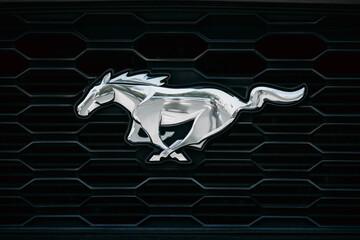
The Ford Motor Company has a similar opportunity to revisit the phenomenal success of the original Mustang, a two-door sports car that sold over one million units in its first two years. Named after the World War II fighter plane, and launched at the New York World’s Fair in 1964, what came to be known as the “pony car” combined the best of European styling and American ingenuity. In the new age of EVs, Ford has launched the Mustang Mach-E SUV, which carries the Mustang moniker, but, let’s face it, in no way resembles the original.
To be sure, Ford has taken strong steps to electrify its product line, as evidenced by MotorTrend’s recent unanimous selection of the Ford F-150 Lightning as Truck of the Year for 2023. But why not create a real Mustang EV, similar in body design to the one that captured the imagination of a generation of car-buyers. An authentic looking and performing Mustang would give Ford the chance to create a “two-horse” race with Tesla, whose Model 3 is the early leader in the EV passenger car category. By doing so, Ford would be making a statement that it will not cede this all-important segment as the world shifts from combustion engines to electric motors.
Rather than compete solely on the basis of safety features and battery range, Ford could bring back the original pony interior, with its alluring three-dimensional image of horses in flight. Rivian Automotive has made a minor splash in the pickup truck world with its vegan leather interior, an obvious appeal to the environmentally conscious. With vinyl records making a comeback, Ford could bring back the original vinyl interior of the Mustang, or perhaps an engineered material which does not bake or crack in the sun? And as much as many of us enjoy the utter silence of an EV motor, Ford could embed a device that simulates the growl of the Mustang engine, an option for traditional automotive enthusiasts.
And who knows? An EV incarnation of the original Mustang might be even more successful than the original. After all, the new Top Gun: Maverick achieved a 96 percent approval rating on Rotten Tomatoes, while its predecessor tallied a mere 58 percent. So too does Ford have the opportunity to create an even more popular Mustang that would reach a wider audience in a new era of consumer transportation.